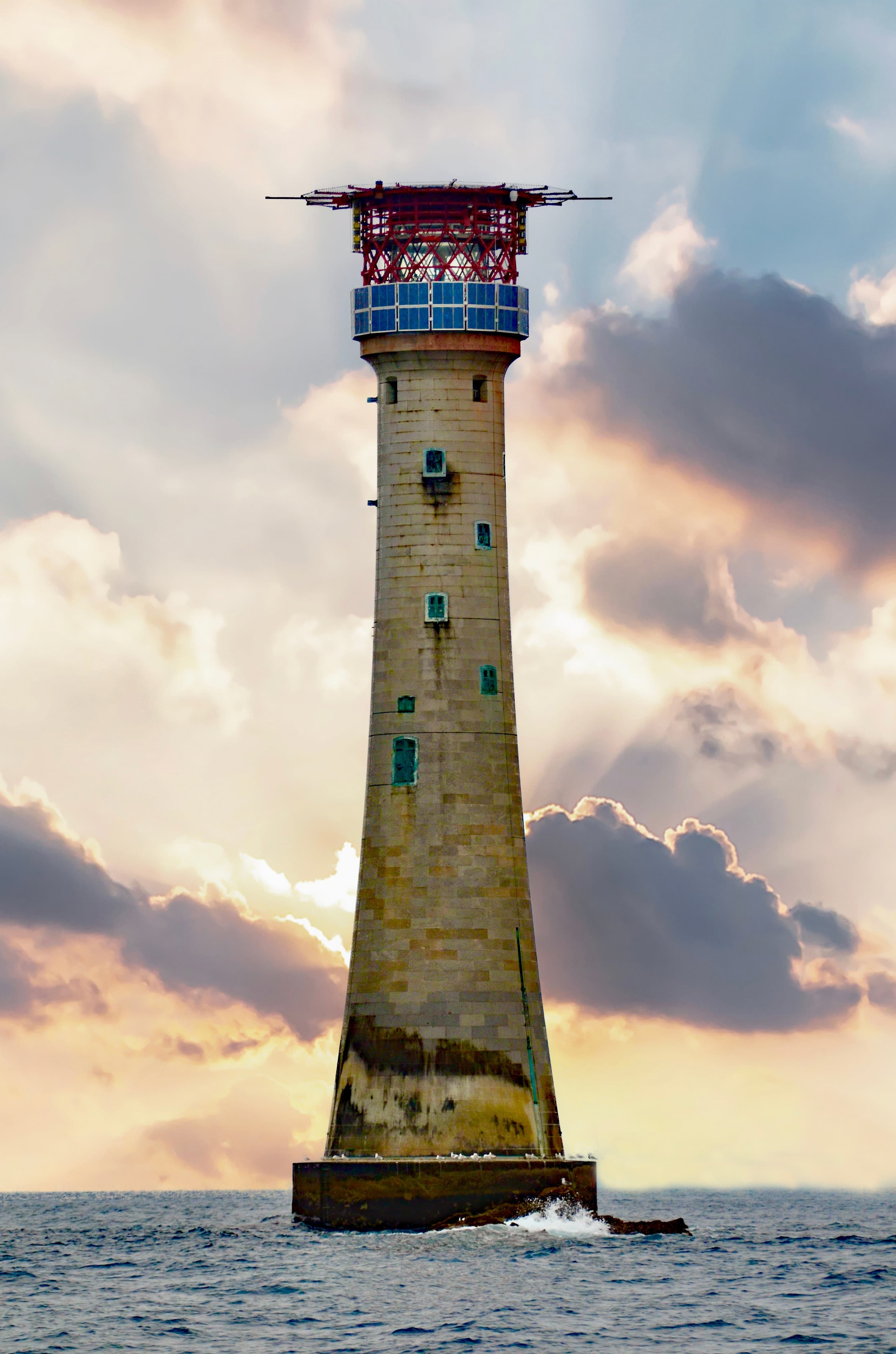
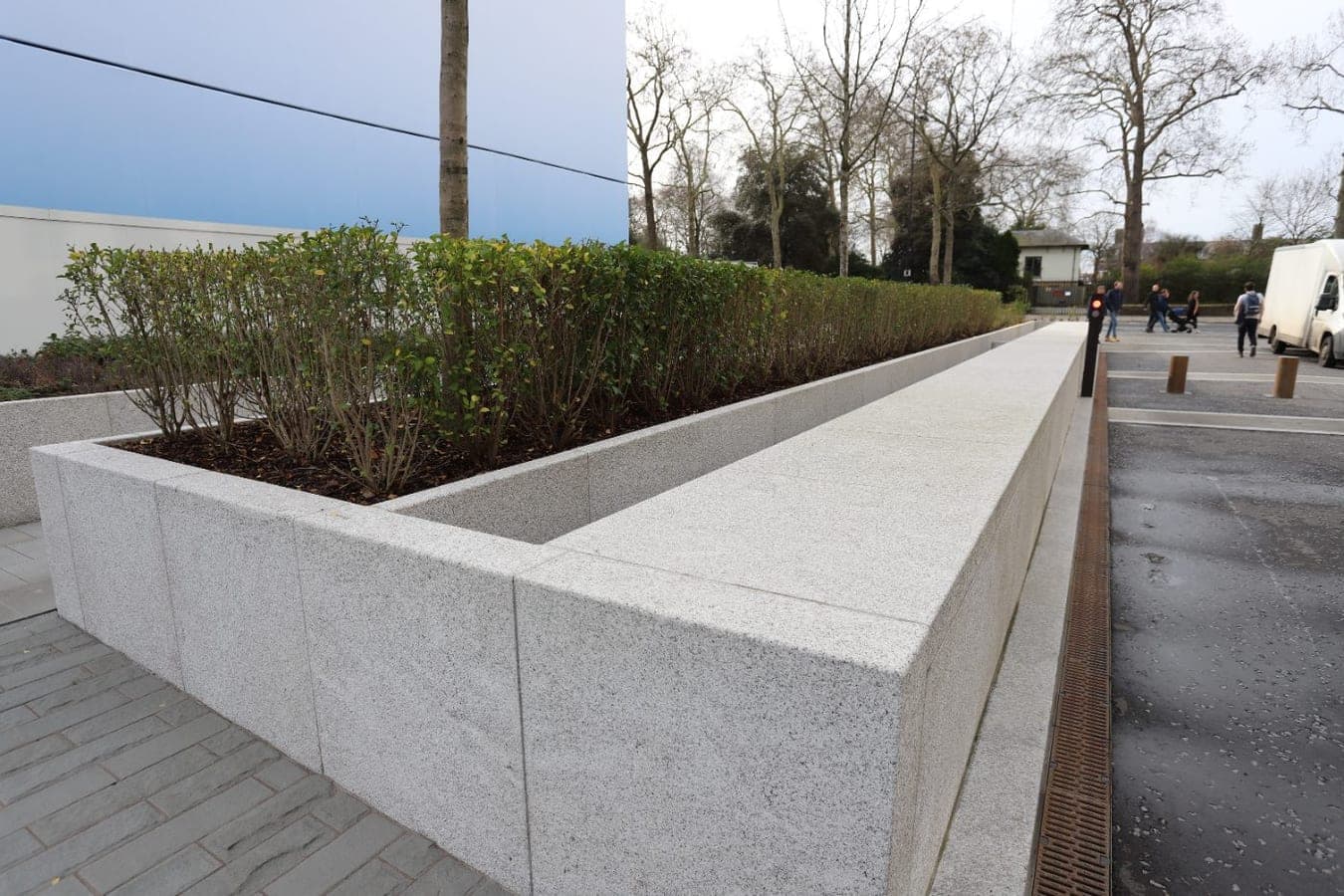
Granite is often chosen because it looks permanent. De Lank granite has earned that impression through real use in lighthouses, bridges, paving, kerbs, steps and public spaces.
Some materials look strong. Others prove it.
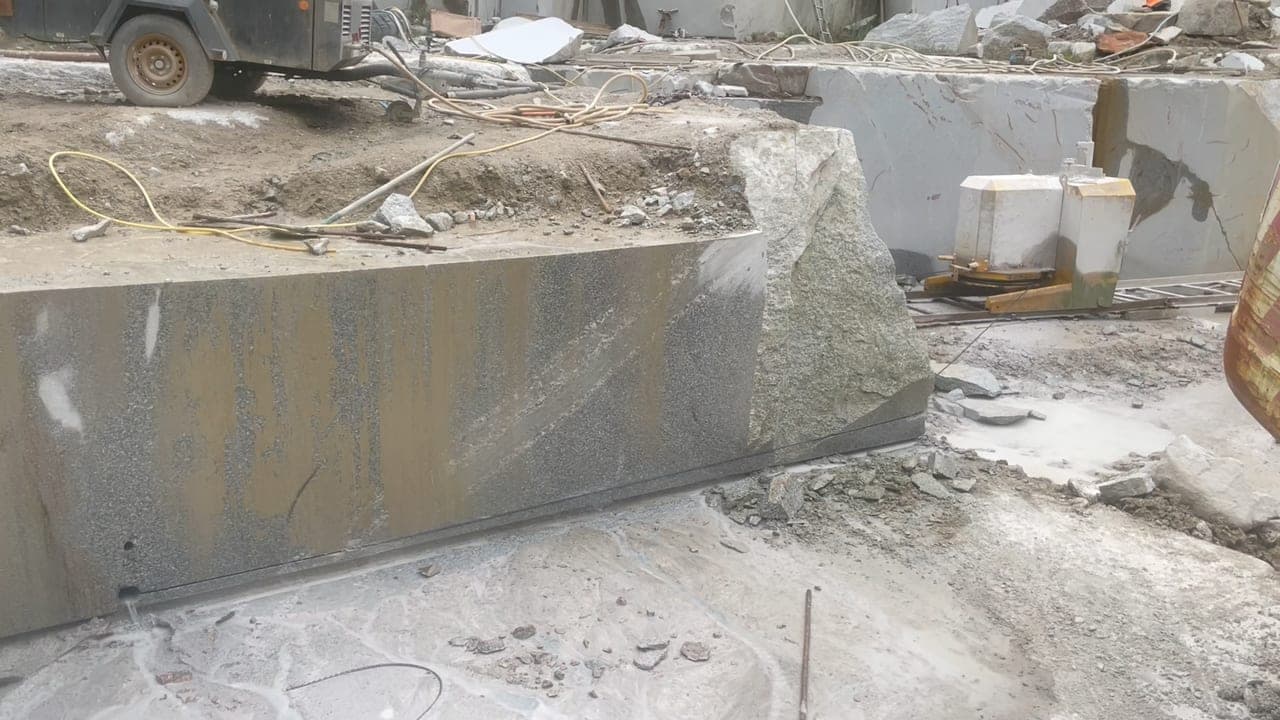
Granite belongs in the second group. It is not a surface dressing pretending to be permanent. It is a hard, dense, natural stone formed deep underground, under conditions that no factory can copy. De Lank granite, quarried on Bodmin Moor in Cornwall, was formed around 290 million years ago. By the time it reaches a building, a square, a step or a kerb, it has already had a long history.
That does not automatically make every granite suitable for every job. Stone still has to be tested, selected, cut, installed and maintained properly. But it does explain why good granite has always been trusted in places where failure would be expensive, awkward or unacceptable.
De Lank granite is a silver-grey Cornish granite with a long record of use in demanding external settings. It has been supplied for lighthouses, bridges, embankments, paving, public realm, memorials and architectural masonry. These are not easy applications. They expose stone to frost, rain, salt, standing water, footfall, cleaning, impact and time.
The important technical point is simple: water is often the enemy of external stone. If water can easily get into a stone, freeze, expand and repeat that cycle winter after winter, it can eventually weaken the material. De Lank granite has very low water absorption, which means there is little opportunity for water to enter the stone in the first place. In plain English, it does not behave like a thirsty stone.
That is why frost resistance is not a bolt-on feature. It comes from the nature of the material. Dense granite, properly specified and installed, is extremely well suited to British weather and to export projects in other countries with harsh climates.
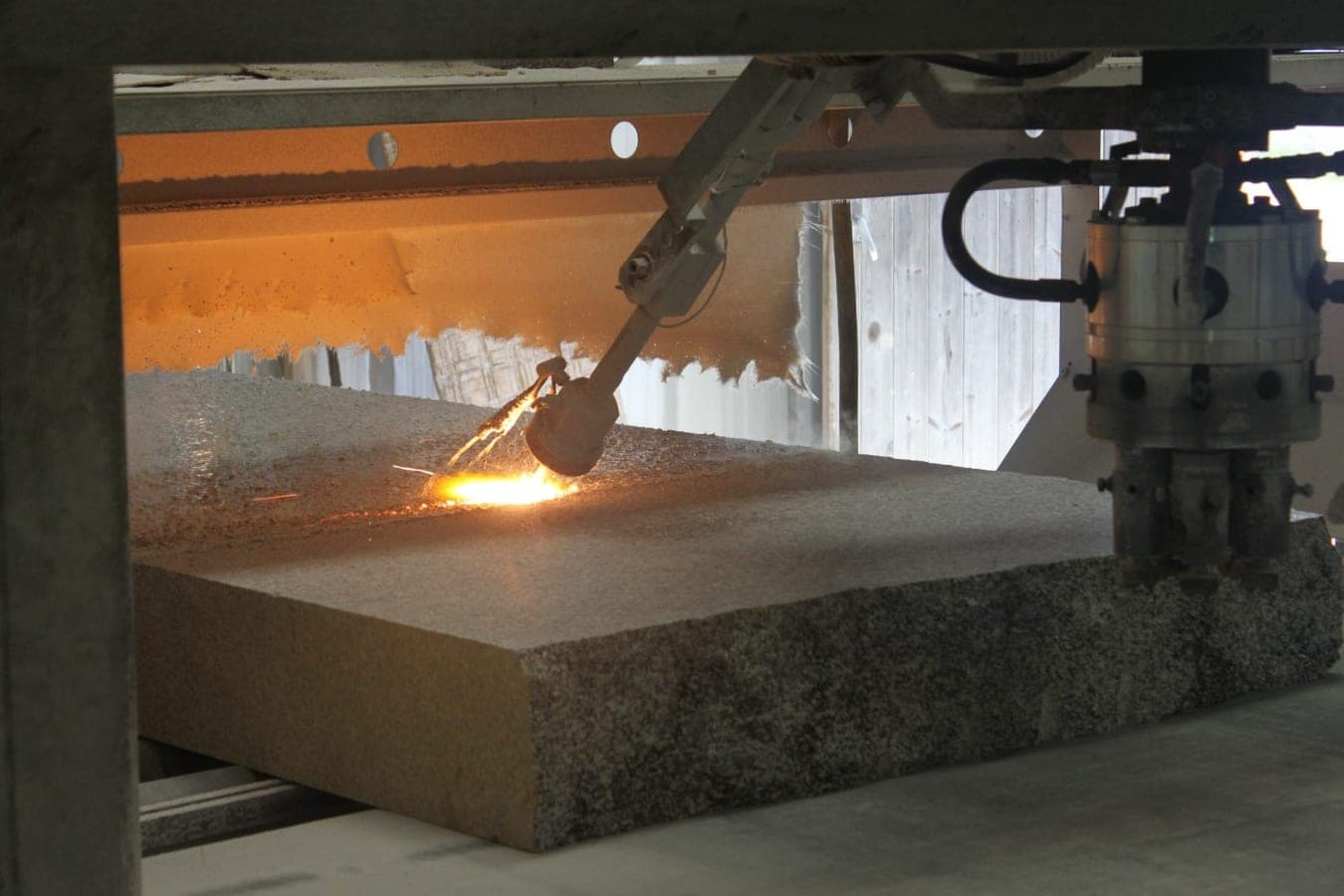
Strength matters too, but it is worth being precise. Paving performance is not judged by one number alone. Compressive strength, flexural strength, breaking load, abrasion resistance, slip resistance, thickness, bedding, jointing and drainage all play their part. The stone is one part of a system. A good granite laid badly can still fail as paving. A good design respects both the material and the construction beneath it.
But when the design is right, De Lank granite gives the specifier a serious starting point. It is dense, hard-wearing and slow to weather. Its surface may mellow over time, particularly in exposed or heavily trafficked locations, but that is different from deterioration. It is the natural ageing of a durable material.
You can see this most clearly in public places. Trafalgar Square is a useful example because it is not a quiet garden path or a private terrace. It is one of the busiest public spaces in Britain. The granite there has to cope with millions of feet, events, cleaning and constant use. A stone in that setting cannot be precious. It has to work. The same principle applies to kerbs, steps, setts, bridges and embankments. These are places where materials are tested quietly every day. Nobody celebrates a kerb because it has survived another winter. Nobody notices a step because it is still doing its job. But that is exactly the point. The best long-life materials often disappear into service.
De Lank granite has also been used in projects where the atmosphere is part of the challenge: coastal and tidal works, lighthouses, bridges and river settings. In those places, stone is not simply decorative. It is exposed to the weather at its most persistent.
This is why granite should not be judged only by the purchase price. A cheaper material may look acceptable on a sample board, but the real cost of paving, kerbs or masonry is measured over decades. Replacement, maintenance, disruption and failure all have a cost of their own.
A long-life stone changes that calculation. It asks a different question: not “what is the cheapest way to cover this surface?”, but “what material still makes sense in 50, 75 or 100 years?”
De Lank granite is not magic. It still needs correct specification. It still needs proper installation. It still needs sensible maintenance. But it is one of those rare materials where the promise of longevity is not just a claim in a brochure. It is visible in the projects where it has already been used.
That is the real argument for granite. Not that it is fashionable. Not that it is new. But that, when chosen well, it lasts long enough to become part of the place.