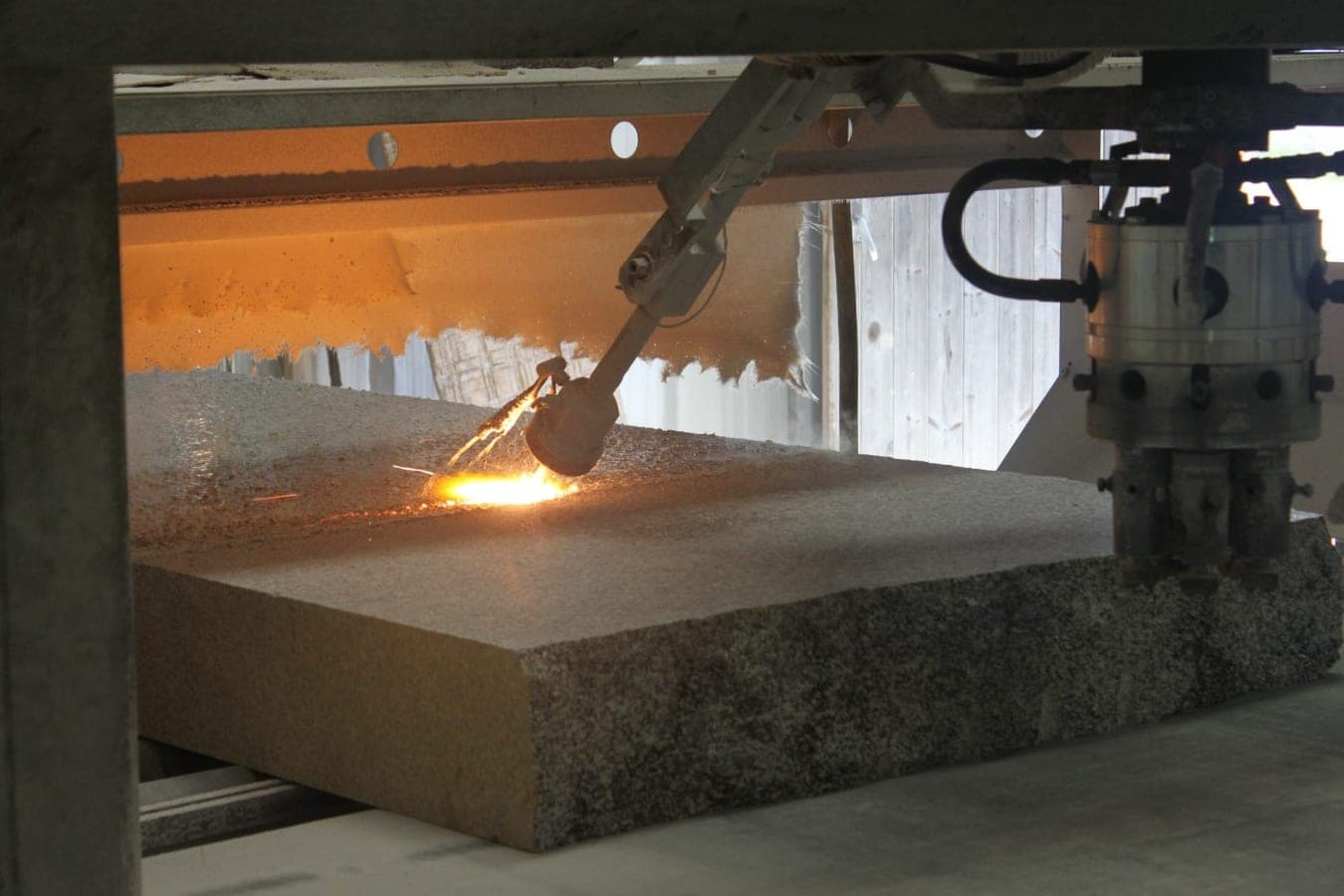
Cornish granite is one of the toughest natural materials in the world to quarry, and at De Lank we do not blast it. Ben Beesley explains how a fifty tonne block is drilled, threaded and cut free from the bench with a diamond wire.
So how do we extract and process the stone? This is the first chapter in a series from the quarry floor, written by the people who do the work.
Why we do not blast
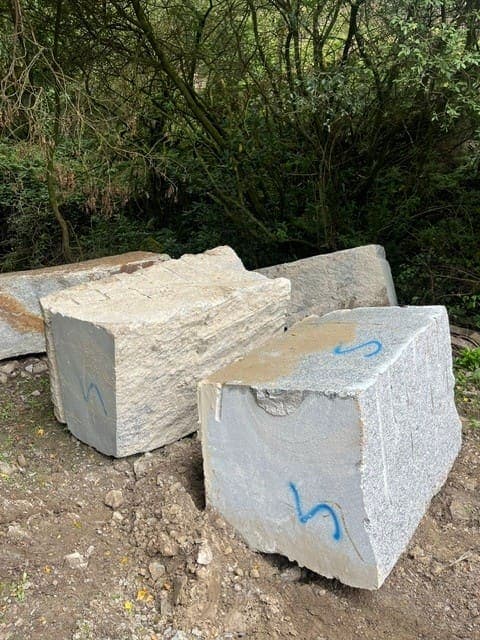
Cornish granite is renowned for its density and strength, which makes it one of the toughest natural materials in the world to quarry. Added to that is the need to be precise. In other industries you can simply blast or rip material away, and it is far faster. We cannot. Our aim is to take shaped, square blocks out of the bench in solid units.
There are good reasons for that. A square block produces less waste, both in the quarry and later in production, so more of every tonne we lift becomes finished stone. It keeps the benches neat and workable for the next section, it lets us control block size accurately, and it keeps the bench at a height that is safe to work. And a squared block is a far safer thing to handle than a broken one.
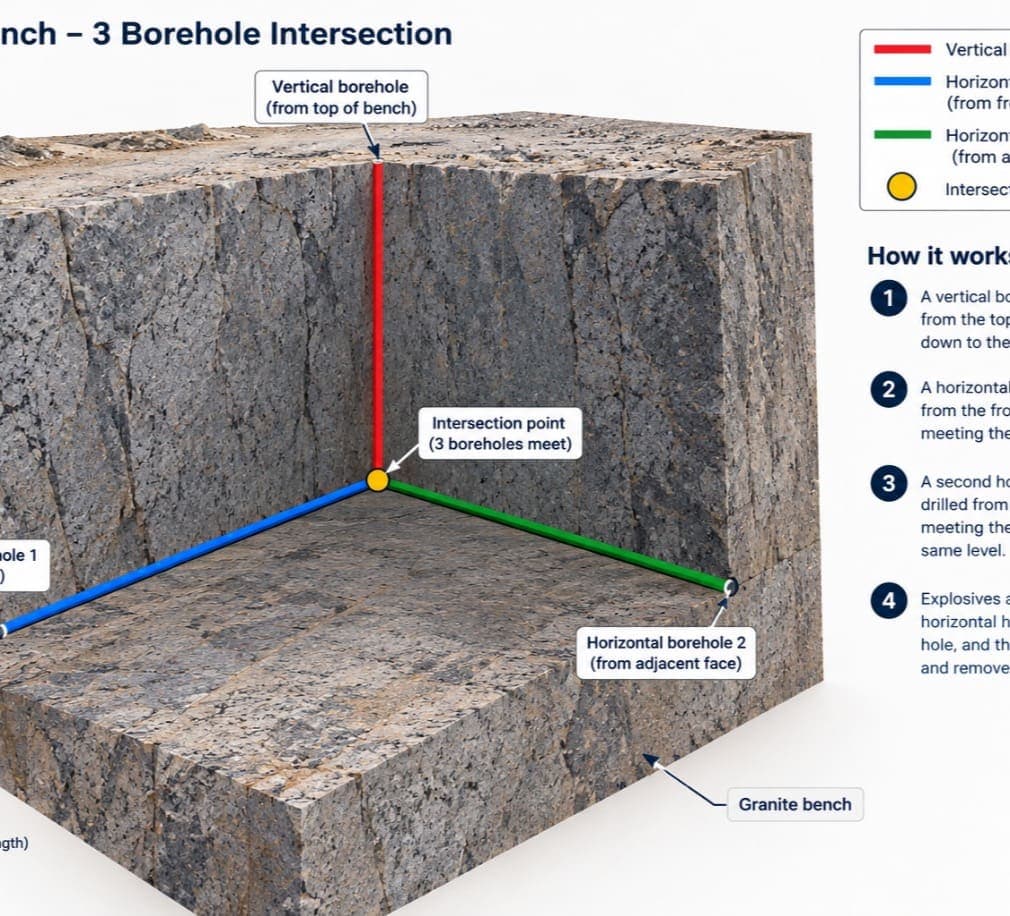
Three holes that have to meet
The process begins with measuring out the section of stone we intend to free from the solid bench. Then the drilling starts.
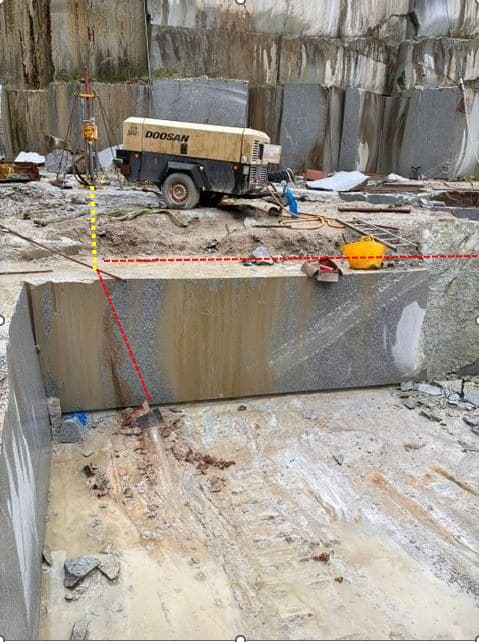
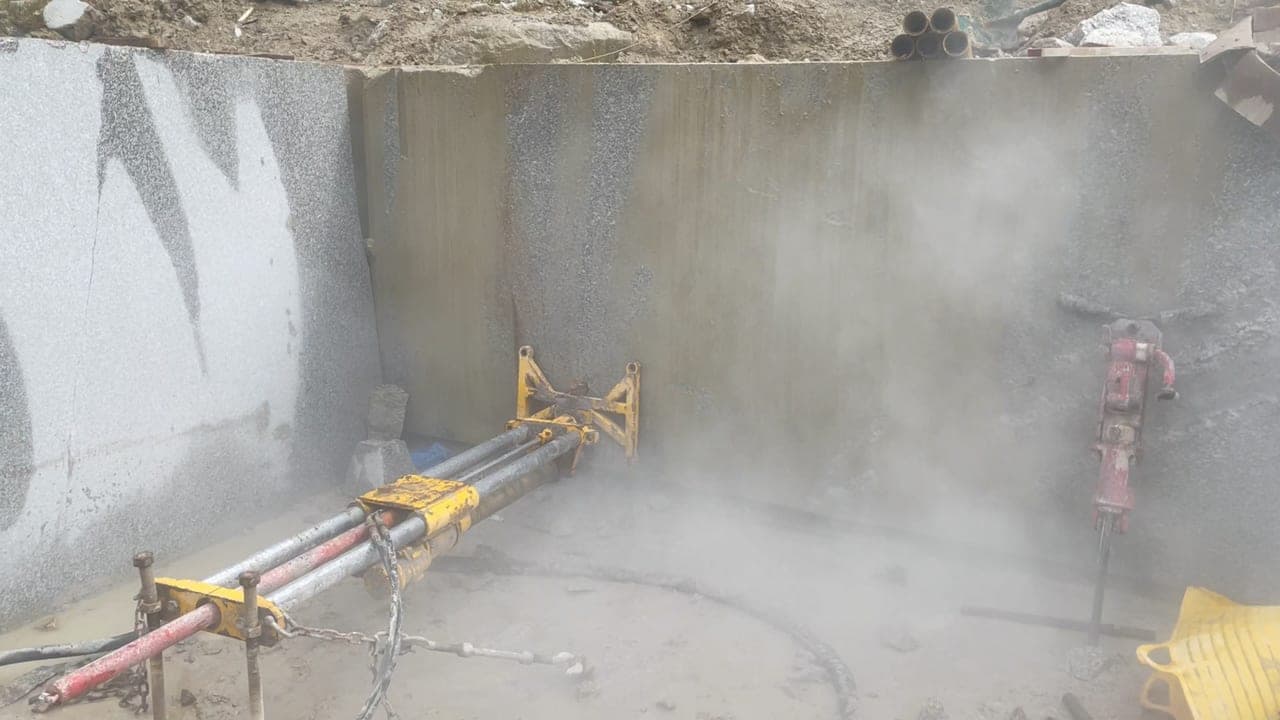
A pneumatic drill rig is anchored to the top of the bench, pointing straight down. It carries a 75mm ballistic drill bit that hammers and churns its way through the granite until it reaches the full depth of the bench, leaving a 75mm hole behind it.
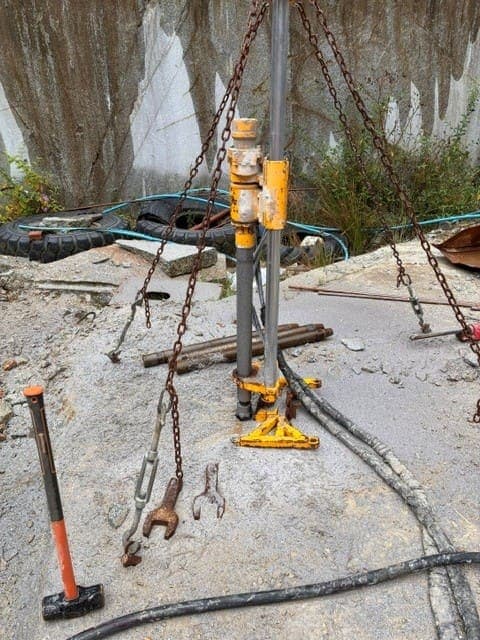
That vertical hole now needs two horizontal holes drilled in to meet it, one from the front face of the bench and one from the adjacent face, so that all three meet at a single point inside the stone. The rig is moved to the foot of the face and set up to bore the first horizontal hole. Lining it up takes experience and patience. Set the rig even a few millimetres out and, by the time the bit has travelled the length of the bench, it can miss the vertical hole by a significant distance, and the whole hole has to be drilled again.
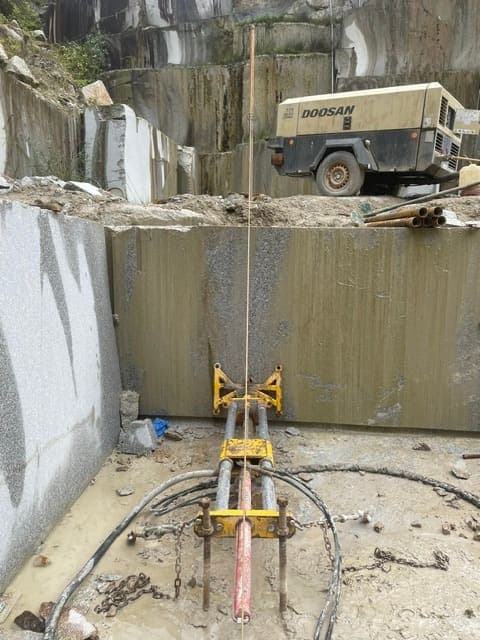
Once the second hole has found the first, the rig moves round to the adjacent face and the third hole is drilled to meet them both. When all three bores meet at the intersection, the cutting can begin.
The base cut comes first
Now the drill rigs give way to the diamond wire saw. A wire strung with diamond beads is threaded in through one horizontal bore, out through the other, and around the flywheel of the saw to form a continuous loop. This is the base cut.
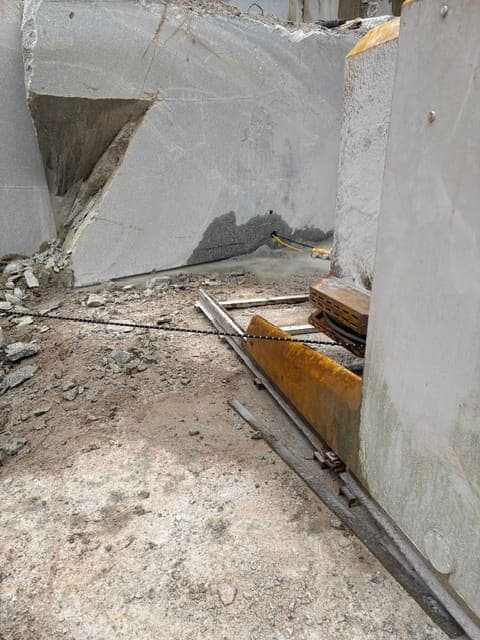
The flywheel drives the wire around the stone while the saw slowly retracts along its metal tracks, drawing the wire through the granite a little like a cheese cutter. Water keeps the wire cool as it works.
The base cut must be made first. While the block is still held on both sides it hangs in suspension over the cut, so its own weight cannot come down and crush the wire beneath it.
Then the sides
With the base cut complete, the wire is looped back through the first horizontal bore and up through the vertical bore, and the first side is cut. The same is repeated from the second horizontal bore for the other side.
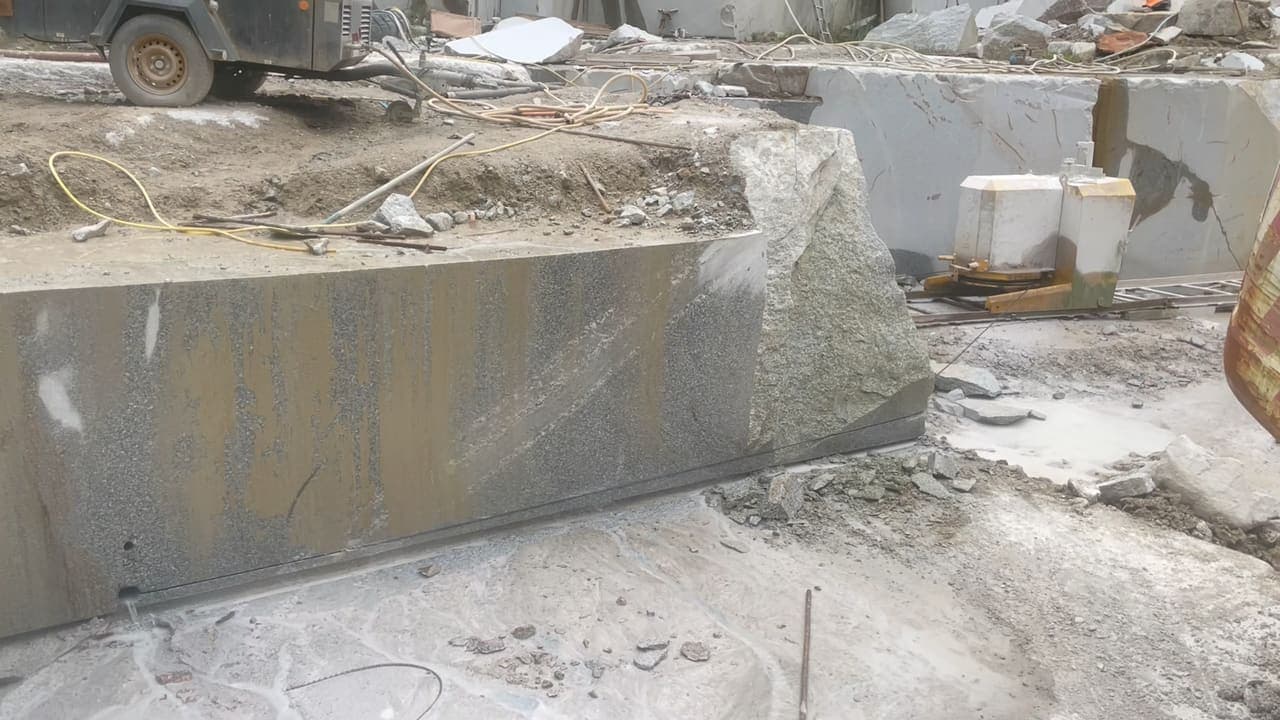
When the wire comes through the last of the stone, a section of granite that can weigh as much as fifty tonnes is free of the bench for the first time since it cooled, some 290 million years ago. It is squared, sound and ready to be lifted out.
Fifty tonnes of granite is loose on the bench. Now it has to move. That is Chapter 2.
Every finish we produce, from flamed paving to hand punched walling, starts with a block freed exactly this way. If you would like to see the stone that comes off this bench, browse the stone range or ask us for samples.